Colombia: megadiverse butterflies
By Peter Hall, advisor to eButterfly
Colombia, situated in northern South America just north of the equator, is considered by many as the country with the highest number of butterfly species (about 4000) in the world. It’s a destination that I had only visited once in my youth and have long desired to visit again. When I found a butterfly trip organized by Greenwings, a company that specializes in butterfly tours, I quickly signed up.
Greenwings restricts its tour size to just six, plus two leaders, one a leading lepidopterist, the other with local knowledge. The small group started the tour in the western city of Pereira and immediately drove in vans to the legendary Montezuma Lodge in the Andes Mountains.
Colombia has three mountain chains (cordilleras) as part of the Andes running north to south with two narrow valleys between them. The Western Cordillera borders on the Choco region of the Pacific lowlands and has Choco and Colombian endemic birds, butterflies and other wildlife. Montezuma Lodge is on the famous Montezuma Road in cloud forest on the edge of Tatama National Natural Park.
In five days at the lodge, we explored the rugged road to the Mount Tatama summit between 1400 to 2400 metres in altitude. Despite some on and off rainy weather, the mostly sunny mornings quickly revealed the extraordinary number of butterfly species. Where two mountain streams crossed the road under bridges, our local guide spread on the vegetation a concoction of smelly substances (better not to ask!) that quickly drew the butterflies in. All butterfly families were represented, sometimes four or five on a single large leaf.
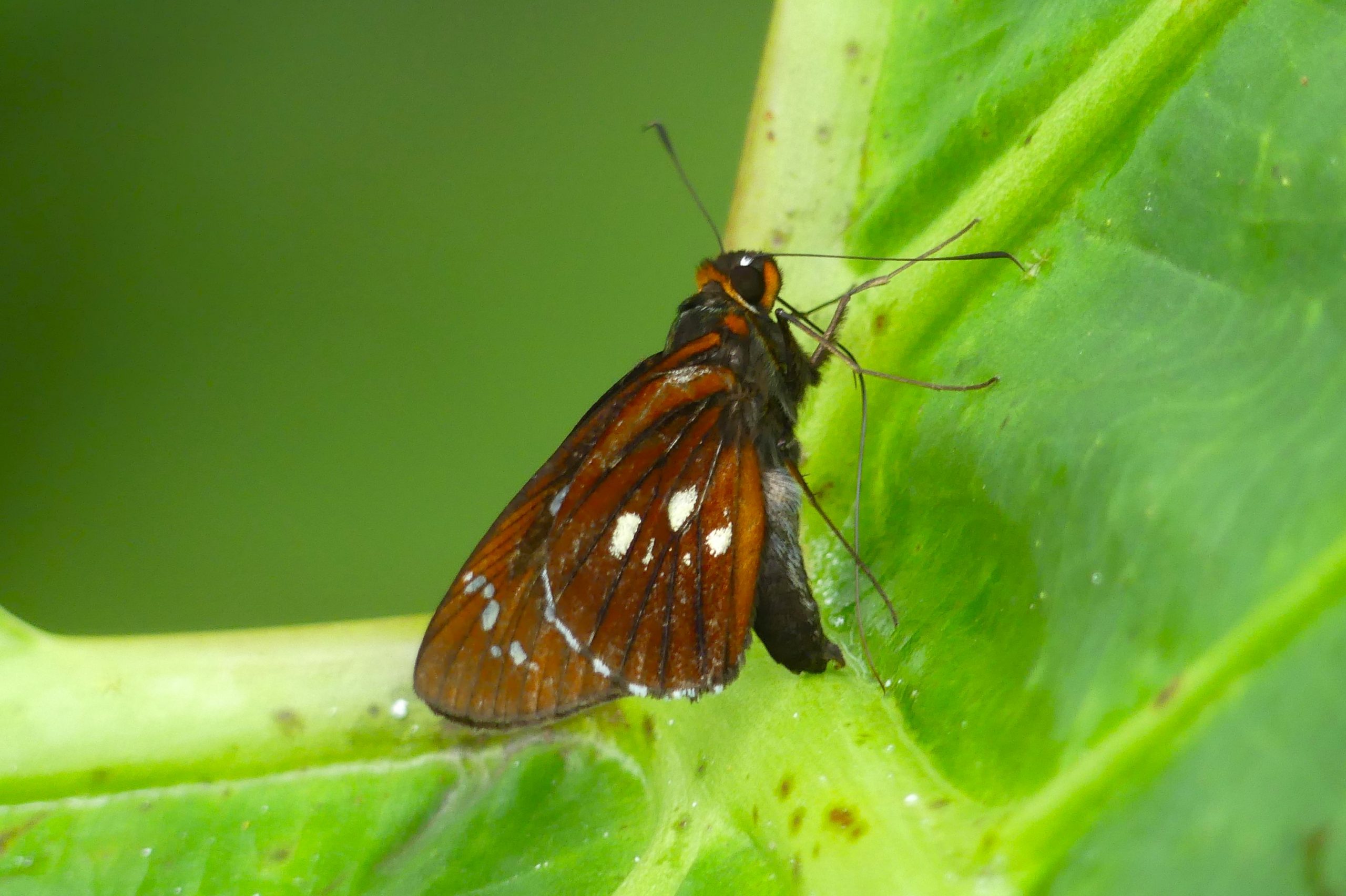
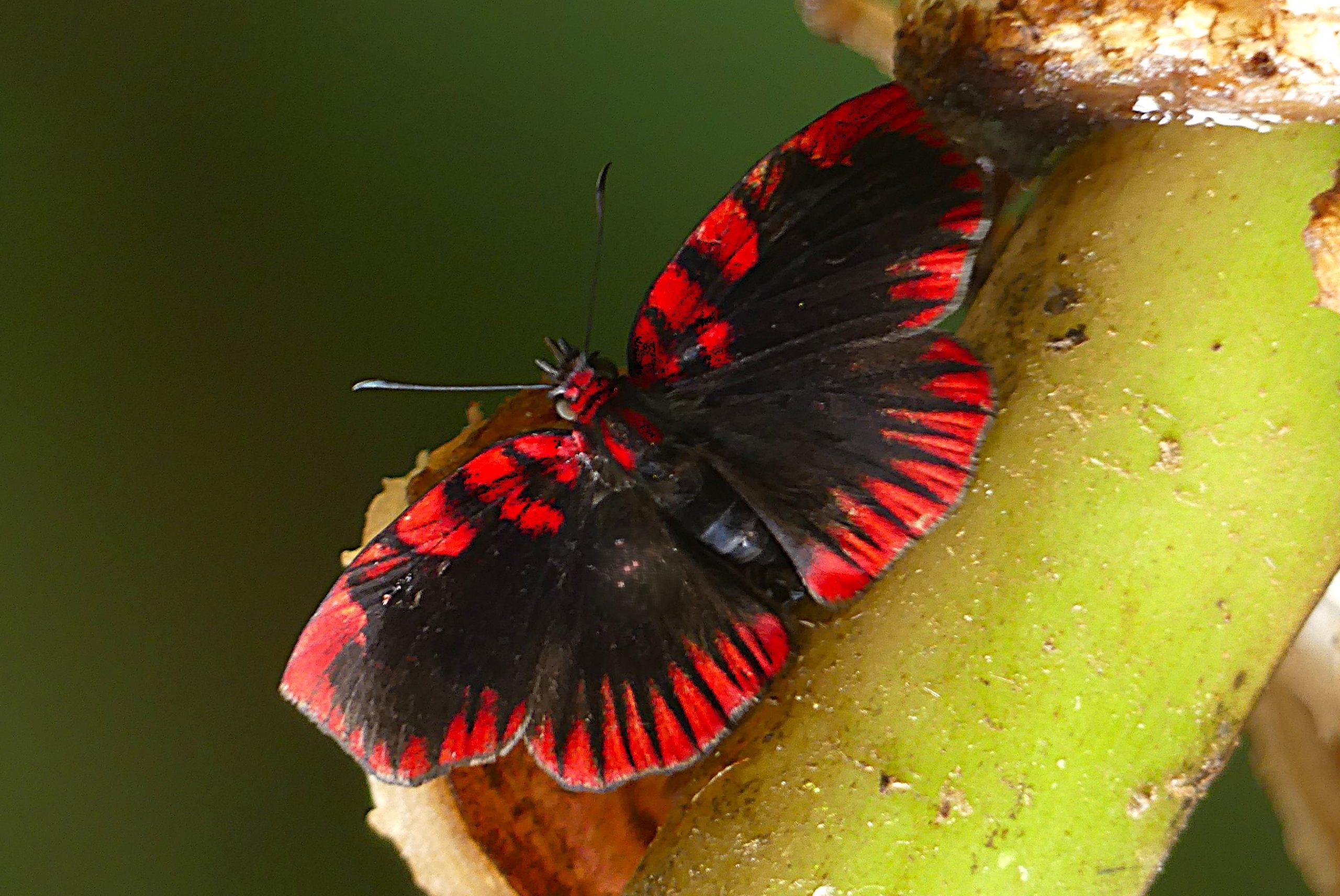
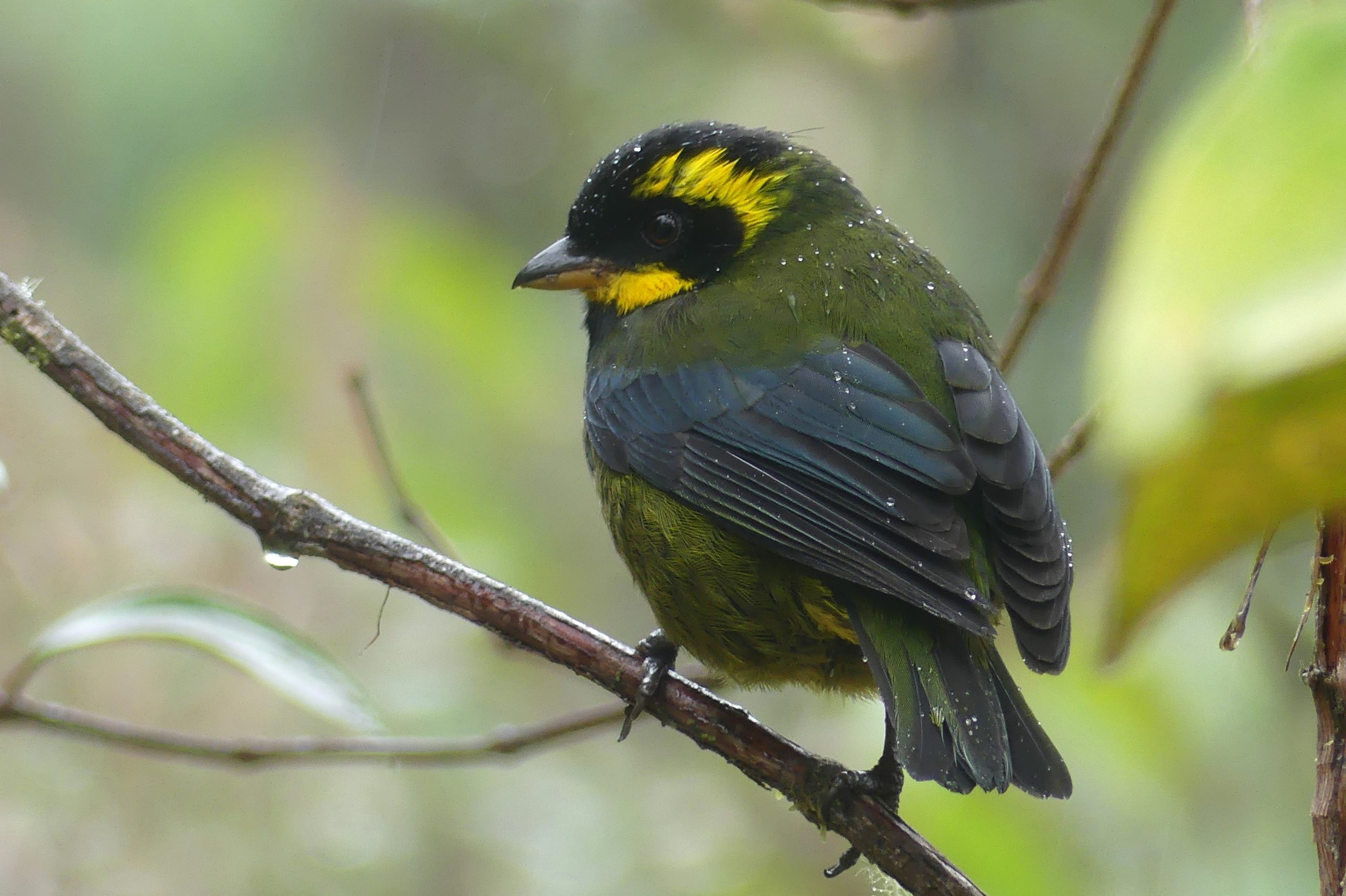
Among the spectacular species were a large variety of metalmarks with the Giant Anteros (Fig. 1) and Periander Metalmark (Fig. 2) standing out. Huge Common Morphos (Fig. 3) flew up and down the road. Seven species of Adelpha and five of Prepona perched on the leaves sipping the concoction. Many leafwings were present but the prize went to the gorgeous Noble Leafwing (Fig. 4). Smaller skippers abounded, including several yet to be named species, and one, Carystina mielkei (Fig. 5), first found on Montezuma Road and only named in 2013. A Blood Red Skipper (Fig. 6) put in an appearance. This was also an area of endemic bird species and on one rainy day at bird feeders part way up the road, some of these were present, including the endangered and very rare Gold-ringed Tanager (Fig. 7).
Montezuma Road (Tatamá region) — Image Gallery
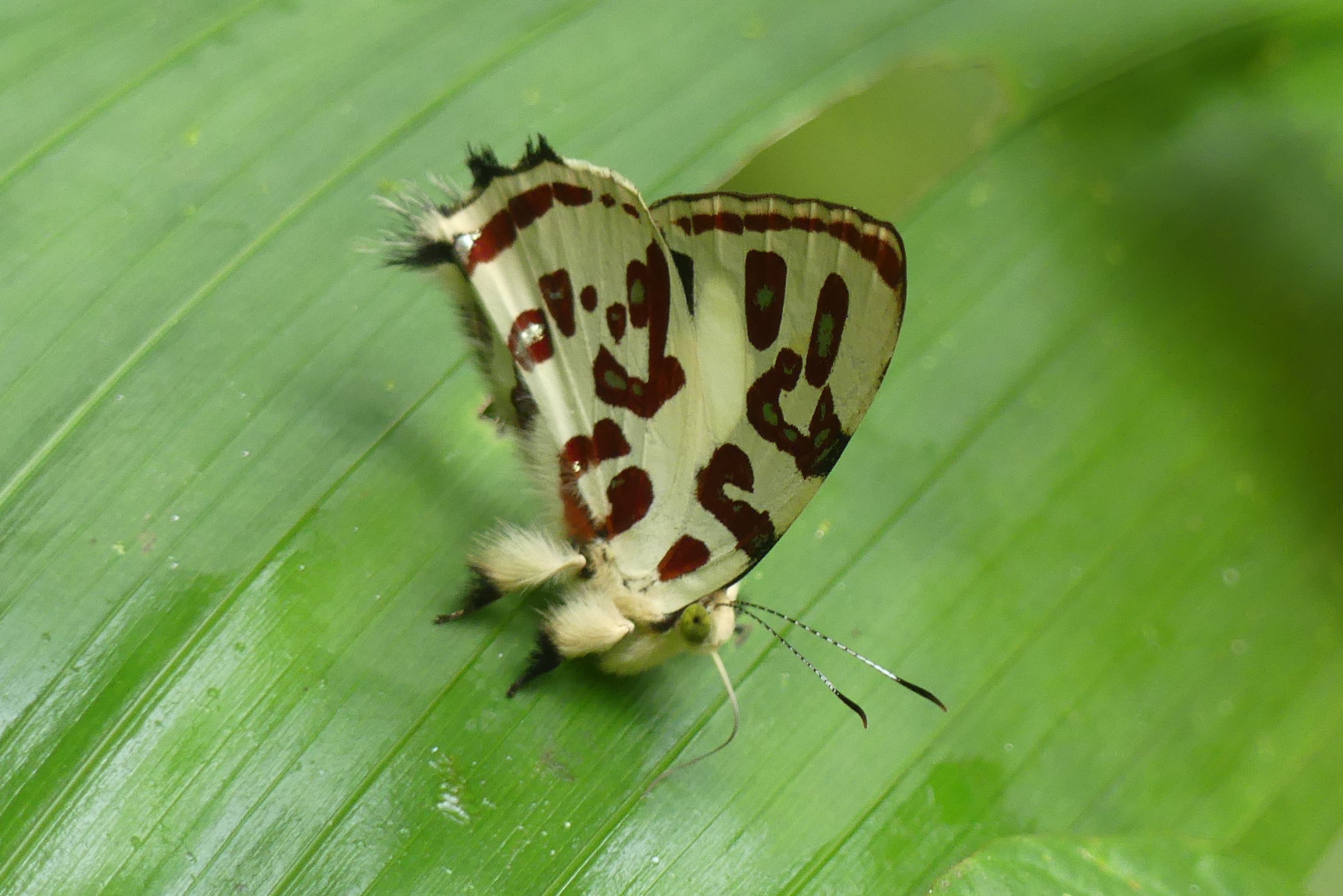
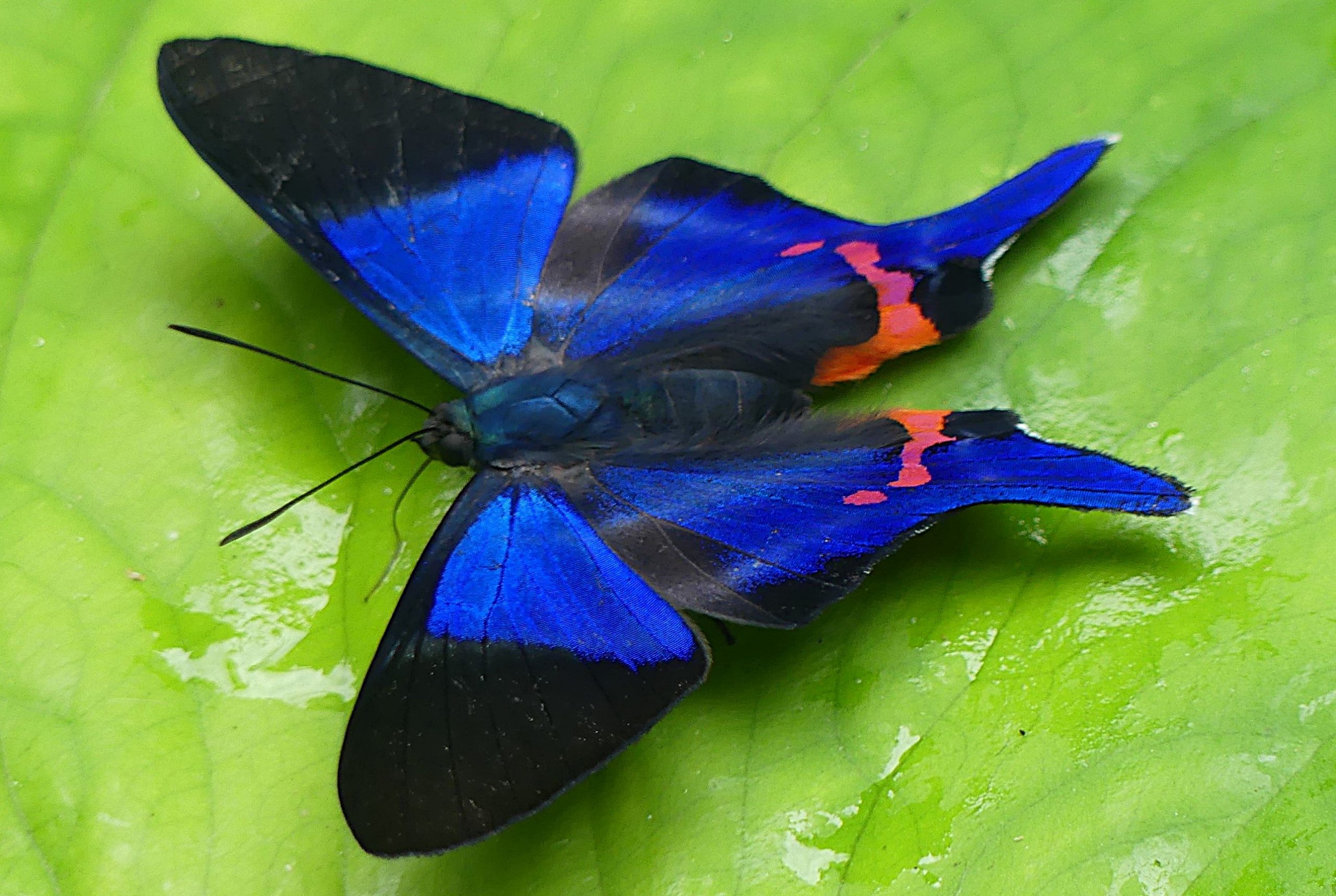
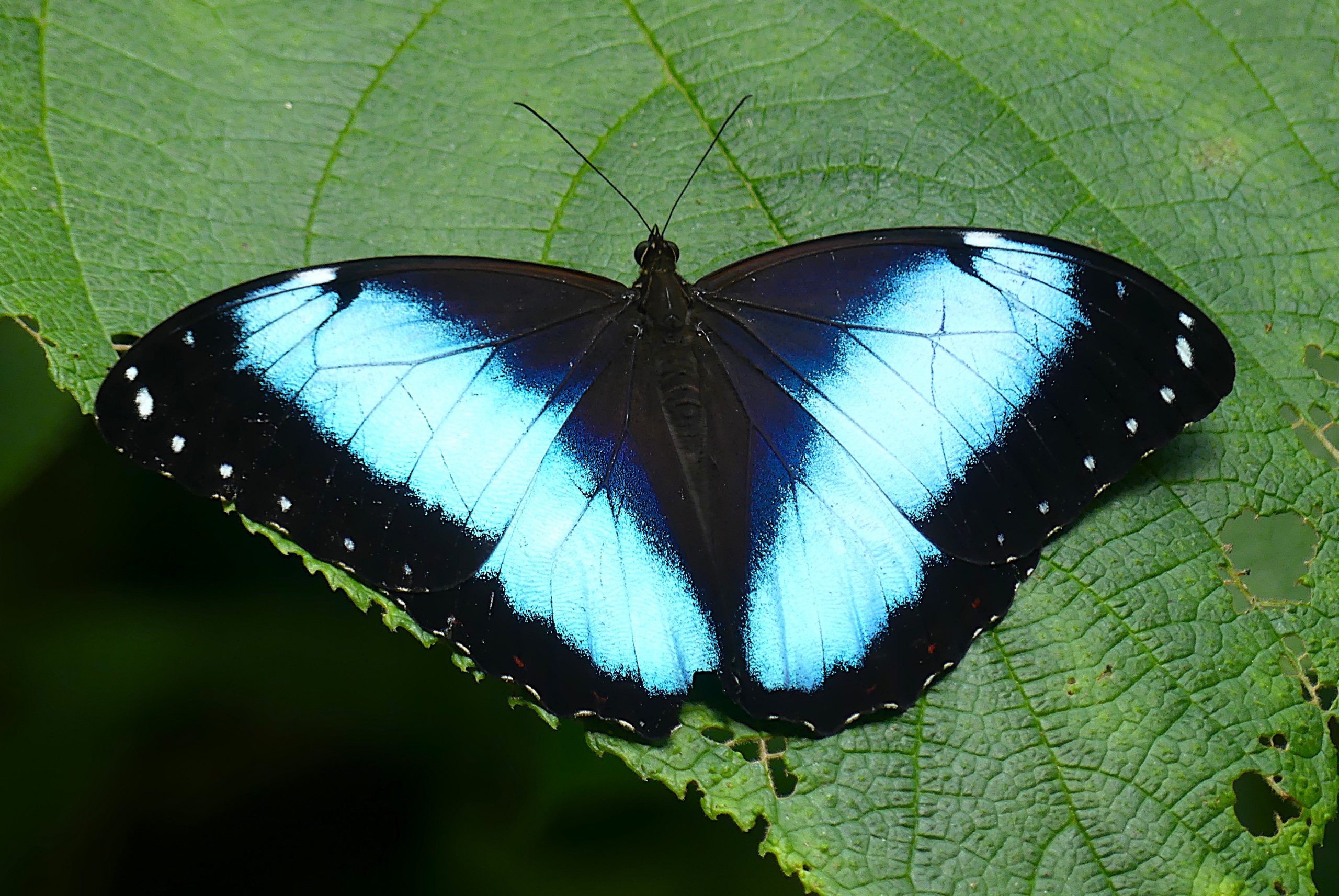
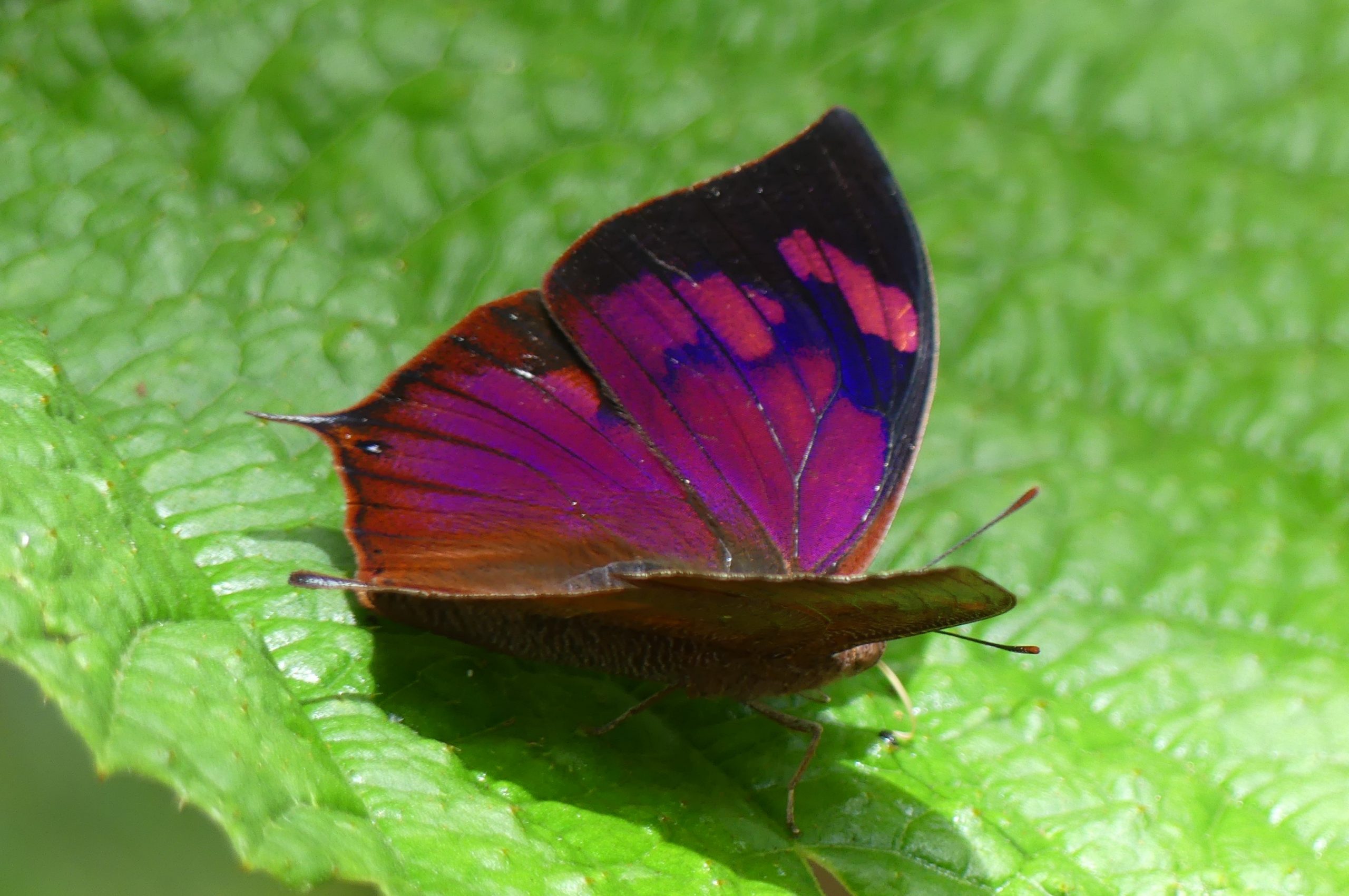
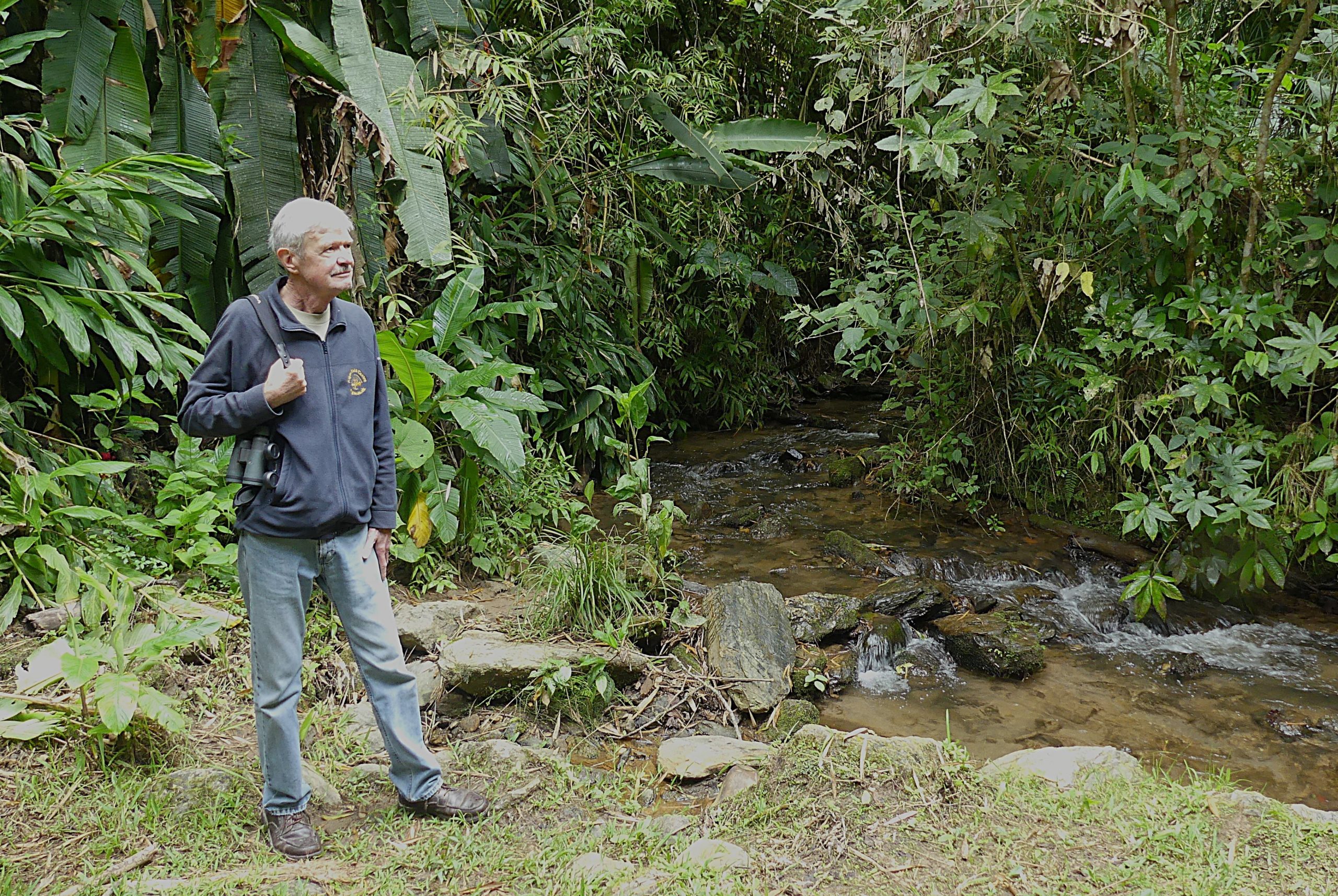
After such an auspicious start, we next headed east by van to the western edge of the Central Cordillera near the city of Manizales. The accommodation was a small inn with a large, sloped butterfly garden down to a mountain stream (Fig. 8). There, and at several nearby locations, the butterfly mix differed from Montezuma Road.
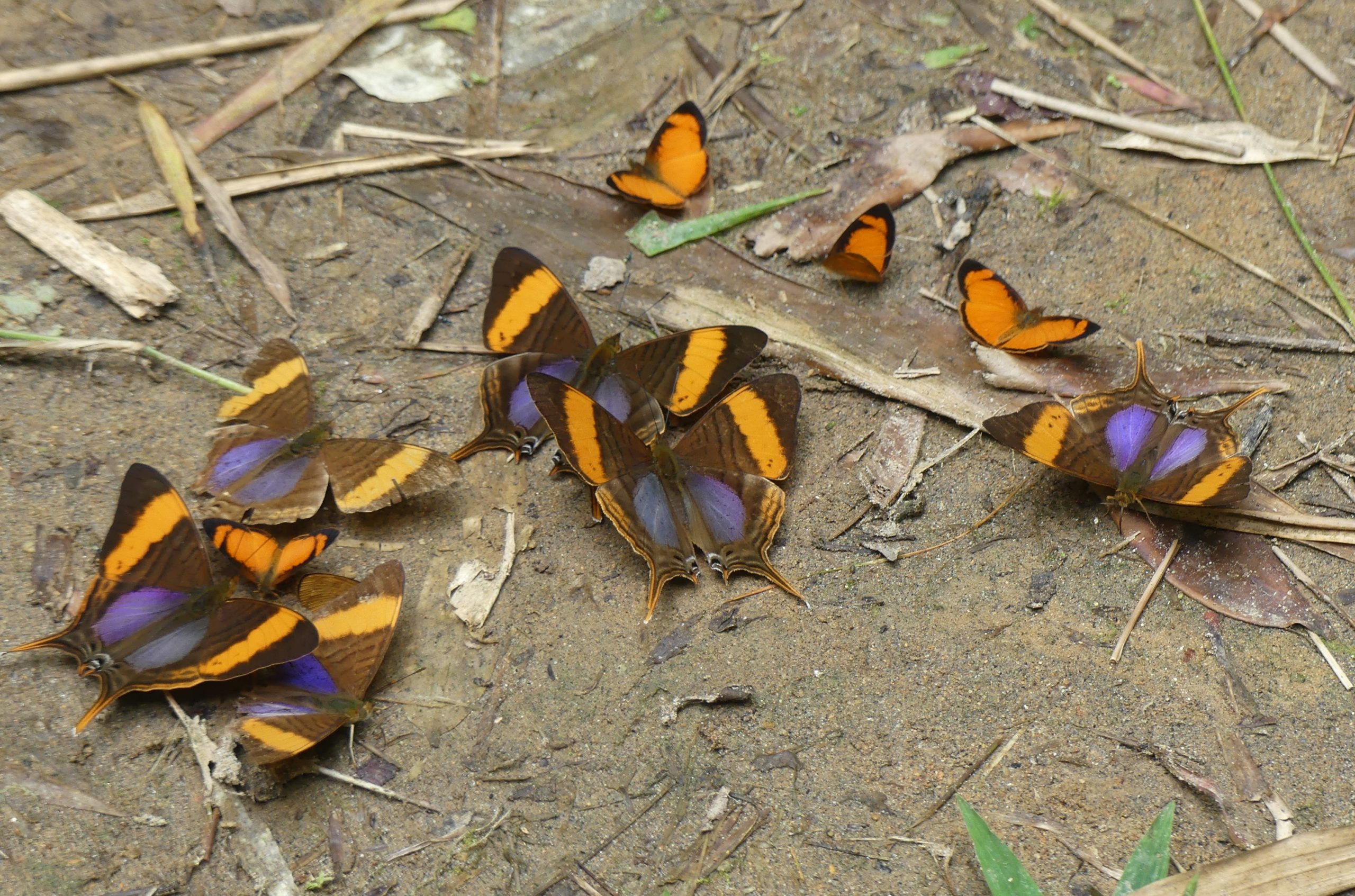
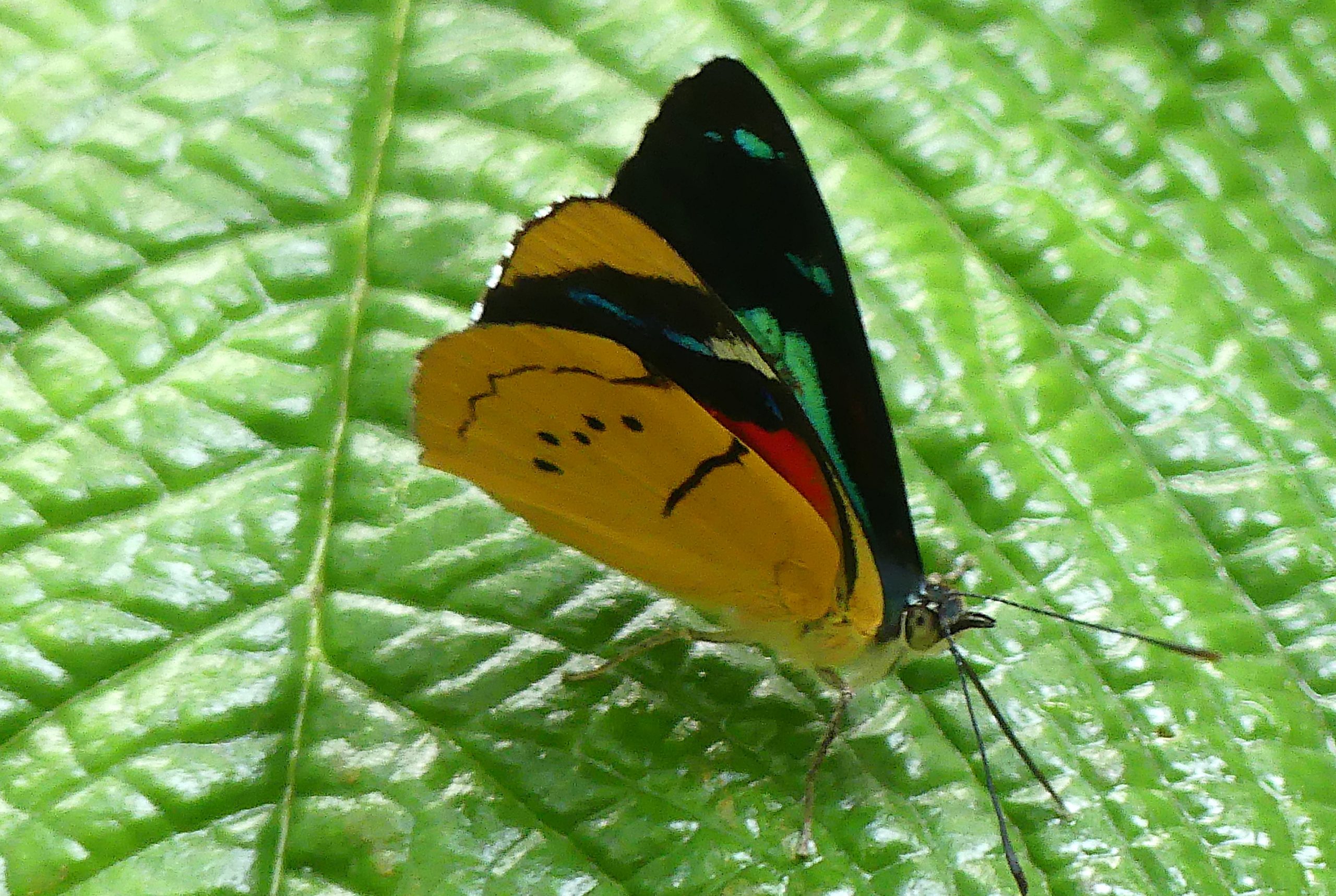
Alongside the small stream, hundreds of butterflies were mudpuddling (Fig. 9), the majority being the striking Orange-banded Daggerwing and Black-bordered Crescent. One multi-coloured species was a single Humboldt’s Perisama (Fig. 10), named after the famous 19th century German explorer, Alexander von Humboldt who travelled in the northern Andes. On the side of a nearby volcano, we travelled as high as 4000 metres and found a number of high-altitude satyrs.
Manizales (Central Cordillera) — Image Gallery
Our final destination was to the Orinoco River watershed in the Eastern Cordillera at the town of Santa Maria de Boyaca. Nearby locations, especially along rivers that led to the Atlantic Ocean, again had a different variety of butterflies, many with Amazon/Orinoco affinities.
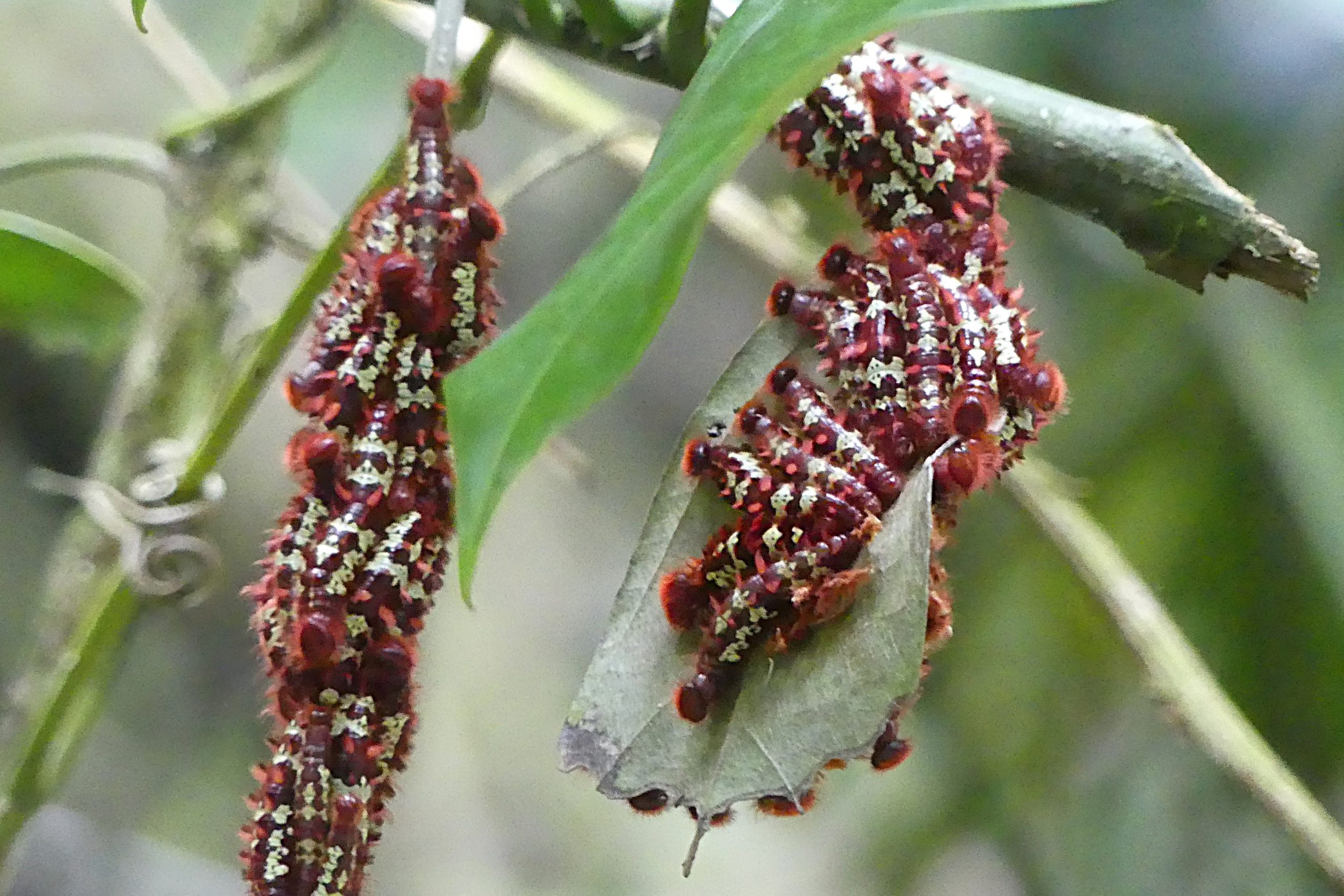
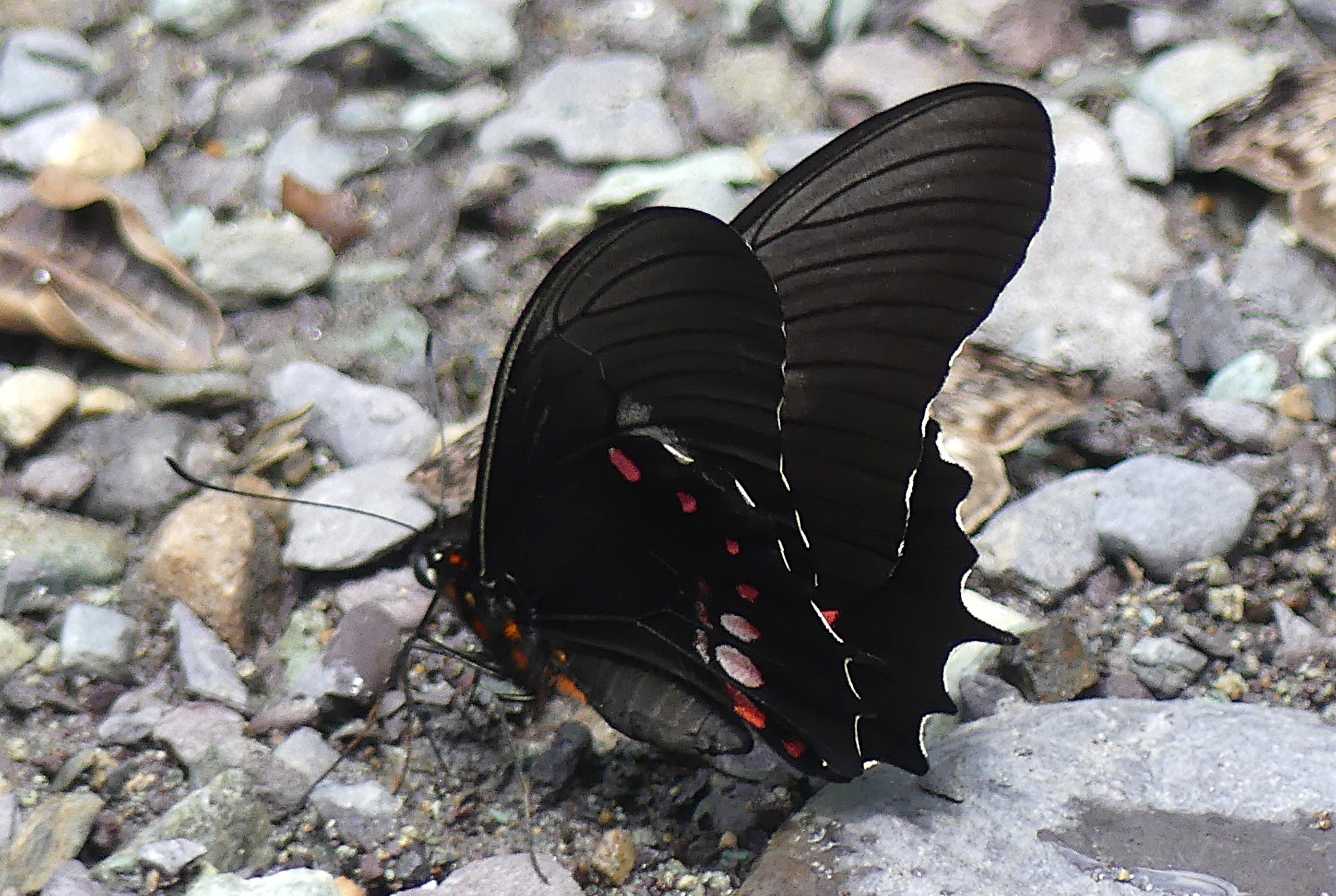
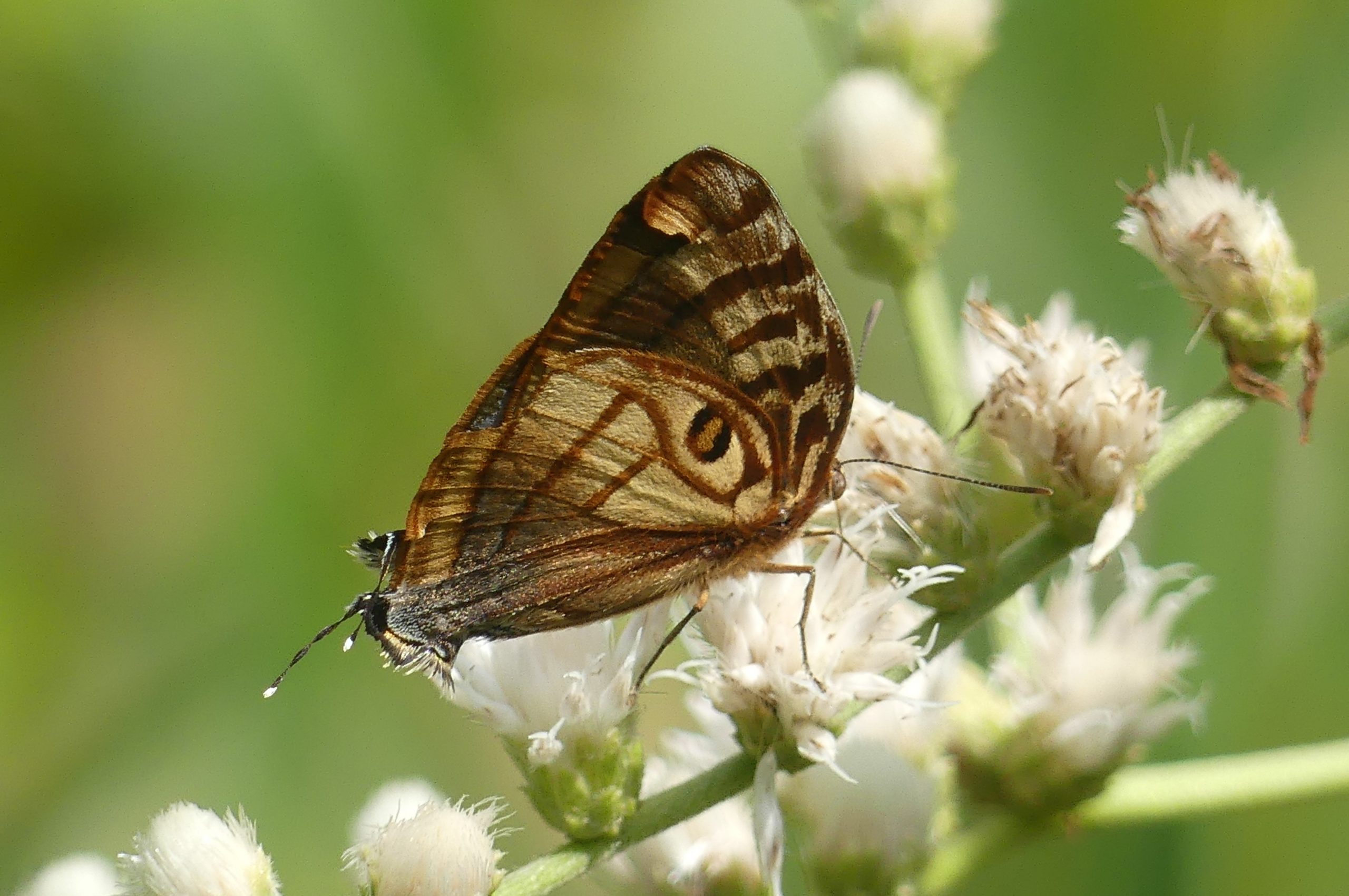
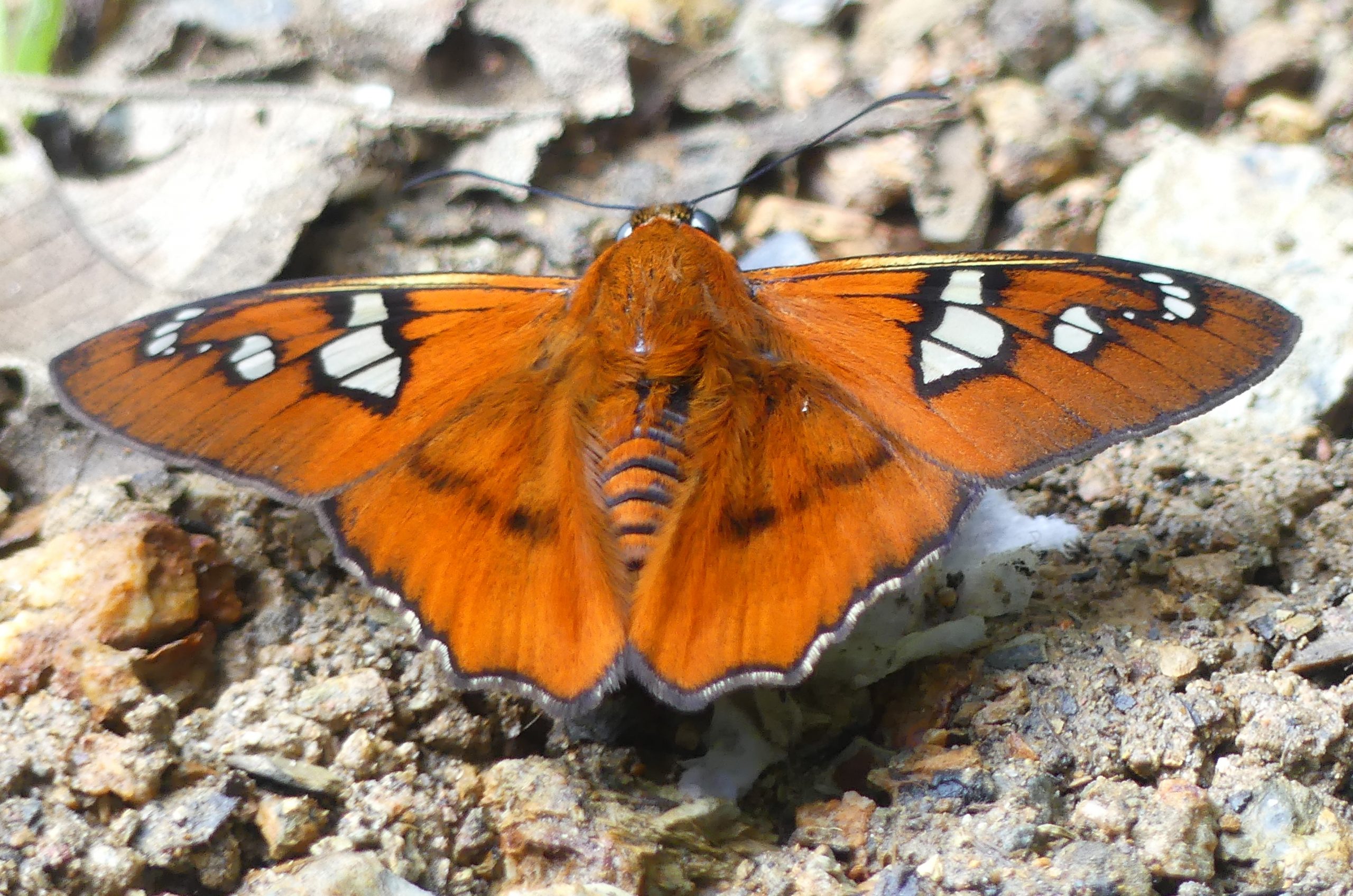
The mountainsides were very steep, so much of our searching was along roads near river edges. Here we found several different morpho species, including a large colony of Telemachus Morpho caterpillars (Fig. 11). There were more swallowtail and hairstreak species than at previous sites, including an Isidorus Swallowtail (Fig. 12) and Meton Hairstreak (Fig. 13). Even the skipper species were more spectacular with a particular find being a Common Mycelus (Fig. 14).
After just two weeks, the group list was about 400 species and these do not include the still-to-be-identified, little-brown-job (LBJ) skippers and metalmarks. My observations are now on eButterfly.
All in all, a megadiverse bonanza of butterflies.
Orinoco watershed (Eastern Cordillera) — Image Gallery